




































France Regional : Corsica | Basque Country | Brittany | Berry, Bourbonnais, Nivernais, Morvan, Auvergne & Ardèche – produced by Cobie Ivens
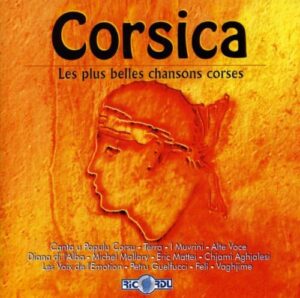 I– Corsica : les plus belles chansons Corses. (01:13:14 min)
Corsican music and song have their roots in the oral traditions and folk customs of village life: songs about agricultural work (*triberra*), daily life (such as lullabies), and painful events (*lamenti*)—or those reflecting the island’s strong religious life (hymns)—emerged under the influence of nearby Sardinia and Italy. Musical instruments such as the *cetera* and the *riberbula* developed in Corsica, though more classical instruments (such as the violin) were also used.
CD. Corsica : les plus belles chansons Corses.
LABEL: Versailles (2002) code: 4775422. VIDEO
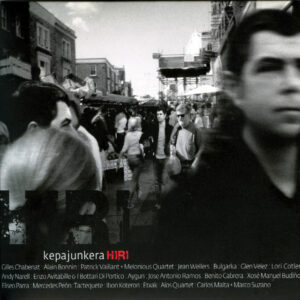 II– Kepa Junkera. (01:12:29 min)
Basque accordionist Kepa Junkera presents an exploration of the theme “City”—*Hiri* in Basque—remaining true to what works: the Basque diatonic accordion and Basque lyrics by writer Xabier Amuriza, alongside non-Basque elements contributed by guests from around the globe. Kepa Junkera has practically reinvented a centuries-old genre; his sound is constantly evolving—fresh, positive, and complex. From Reno to Kokkola (Finland), from Agadir (Morocco) to Tbilisi (Georgia), and from Kiruna on the Arctic Circle to Buenos Aires—passing through the Basque Country along the way—Kepa Junkera travels the world, yet in a sense, never leaves his hometown of Rekalde in Bilbao.
CD. Hiri – Kepa Junkera. LABEL: Elkar (2006) code: KD 725. VIDEO
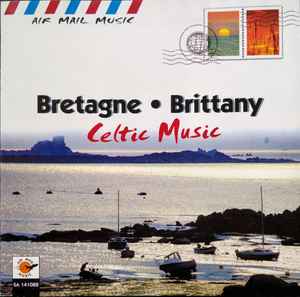 III– Bretagne : Celtic music. (51:19 min)
Traditional and modern music from the Celtic lands. The Celts have left a cultural footprint not only in England, Ireland, and Scotland, but also in Brittany (France) and Galicia (northern Spain), where traditional Celtic music plays a significant role. Beyond this geographical diversity, the various forms of Celtic music differ greatly from one another. Consequently, some music enthusiasts argue that “Celtic” is merely a marketing term. Nevertheless, the concept has gradually become commonplace. “Celtic” can refer to anything from traditional folk music to modern pop. Celtic instruments—such as the fiddle, flute, drum, harp, transverse flute, or bagpipes—are frequently used. Because “Celtic” is such a broad catch-all term, the genre overlaps to some extent with folk music.
CD. Bretagne : Celtic music. LABEL: Air Mail Music (2003) code: SA 141088. VIDEO
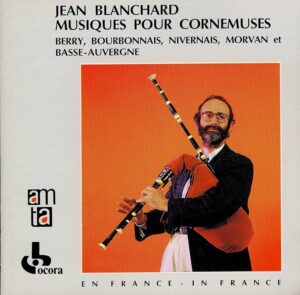 IV– Jean Blanchard. (59:06 min)
On his unadorned bagpipes, he plays original compositions inspired by the French regions of Berry, Bourbonnais, Nivernais, Morvan, and Auvergne—pieces he created between 1995 and 2011. Some have previously been recorded by other musicians, while others are entirely new. Each melody holds its own story, linked to a personal memory that the musician enjoys sharing across the 20 tracks of this solo album (performed on Béchonnet and Central French bagpipes).
CD. Musiques pour cornemuses – Jean Blanchard.
LABEL: Ocora (1988) code: C 559044. VIDEO
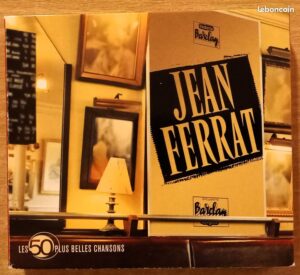 V– Chansons van Jean Ferrat. (01:43:01 min)
Jean Ferrat (1930–2010) was a French singer and songwriter. He was a controversial figure due to the sharp social criticism he voiced in his songs. In the Netherlands, he became known for *La Montagne*—his tribute to the Ardèche—which Friso Wiegersma translated as *Het Dorp*; that song became a timeless hit for Wim Sonneveld. Jean Ferrat wrote the song *Nuit et Brouillard* about the persecution of Jews during the Second World War. This subject was deeply personal to him, as his father had been murdered at Auschwitz.
CD. Chansons – Jean Ferrat. LABEL: Barclay (1988) code: 8273 082. VIDEO
Thank to: