


Evert Jan Nagtegaal with Serenades
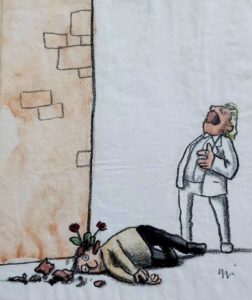
SERENADE
The word serenade comes from the Italian serenata, itself derived from the Latin serenus, meaning ‘calm’ or ‘clear’. Originally, it referred to a piece of music or a musical tribute performed outdoors in the evening for someone.
From the sixteenth century onwards, serenades became a popular way for men to declare their love, singing beneath their beloved’s window, often accompanied by a portable instrument such as a guitar or lute.
Although this is a morning programme, we actually made our recordings in the evening – we’ll let you in on that little secret! Today, we invite you to enjoy serenades by Schubert, Brahms, Hahn, Britten and Strauss.
Playlist:
- Franz Schubert – Ständchen (Zögernd leise), D 920 (Franz Grillparzer)
Baritone Evert Jan Nagtegaal, Vocaal Ensemble Multiple Voice (women’s choir), conducted by Paul de Kok; Noël Lee, piano. - Johannes Brahms –
- Serenade, Op. 58/8 (Schack)
- Vor dein Fenster, Op. 14/1 (folk song)
Baritone Dietrich Fischer-Dieskau and pianist Wolfgang Sawallisch.
3. Reynaldo Hahn – Venezia (texts in Venetian dialect)
- Sopra l’acqua indormenzada
- La Barcheta
- L’avertimento
- La Biondina in Gondoleta
- Che peca!
- La Primavera
Baritone Tassis Christoyannis and pianist Jeff Cohen.
4. Benjamin Britten – Serenade for Tenor, Horn and Strings, Op. 31
- Prologue – solo horn
- Pastoral (The Evening Quatrains by Charles Cotton, 1630–1687)
- Nocturne (Blow, bugle, blow by Alfred, Lord Tennyson, 1809–1892)
- Elegy (The Sick Rose by William Blake, 1757–1827)
- Dirge (Lyke-Wake Dirge, anonymous, fifteenth century)
- Hymn (Hymn to Diana by Ben Jonson, 1572–1637)
- Sonnet (To Sleep by John Keats, 1795–1821)
- Epilogue – solo horn; a reprise of the Prologue, performed offstage.
Tenor Adrian Thompson, Michael Thompson, horn; Bournemouth Sinfonietta, conducted by David Lloyd-Jones.
5. Richard Strauss – Ständchen, Op. 17/2 (Schack)
Soprano Elly Ameling and pianist Dalton Baldwin.
Illustration: ‘Serenade’ – Yann Wehrling @yann_wehrling
