








































Middle East: Marcel Khalifé, The Disorientalists, Brader Mûsikî, Giora Feidman, Shisha Group, Oum Kolthoom, produced by Cobie Ivens.
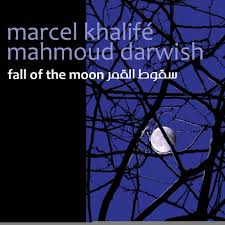 I– Marcel Khalifé. (01:59:41 min)
With his music, Lebanese composer Marcel Khalifé gives a voice to powerless and oppressed people. He is a freedom fighter who peacefully addresses themes such as exile, homesickness and the suffering of war. He does this, among other things, by setting texts by Palestinian poet Mahmoud Darwish to music. The album Fall Of The Moon contains no less than two hours of music. Khalifé plays the ud (Arabic lute) and sings; his Al Mayadine Ensemble includes his wife Yolla (vocals), sons Rami (piano) and Bachar (percussion), and singer Oumaima Khalil. The Kyiv Philharmonic Orchestra, conducted by Vladimir Sirinko, also performs. The music is atmospheric and poetic, with both Arabic and Western influences.
CD. Fall of the moon – Marcel Khalifé. LABEL: Nagam (2015), code: NR1020. VIDEO
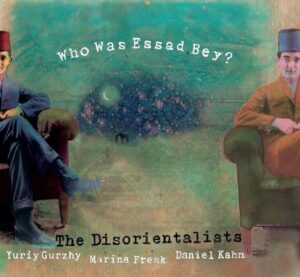 II– The Disorientalists. (51:04 min)
Who was Essed Bey? Tough question. Essed Bey was the alias of Lev Nussimbaum (1905-1942), a man of many faces: German and Russian, Jew and Muslim, dandy and diplomat. A man for whom identity was a fluid concept, and that appeals to The Disorientalists. The trio comes from Berlin and sings with equal ease in German, English, and Russian. Musically, the trio also veers between chanson, Klezmer, Russian waltzes, Weimar cabaret, and folk. The lyrics on this album are inspired by Essed Bey’s turbulent life. All the major revolutions, wars, and uprisings of the 20th century are featured on this album. Dated, by no means. The identity questions raised by Who Was Essed Bey? are still relevant today. But thanks to the unique musical setting, you can also choose to ignore the lyrics and enjoy this musical journey through space and time.
CD. Who was Essad Bey? – The Disorientalists. LABEL: Oriente Musik (2017), code: OBECD802. VIDEO
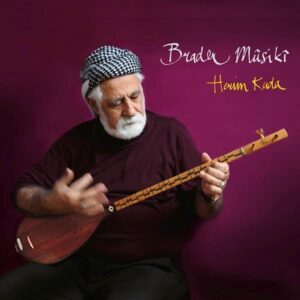 III– Brader Mûsikî. (47:57 min)
Making music is his profession, acting and painting his hobbies. Brader Mûsikî comes from the village of Mûsika in Turkey. His father made traditional Kurdish music. The young Brader once traded his shoes for a flute, he wanted to make music so much. In 1986 he fled to the Netherlands and settled in Arnhem. In 2005 he returned to his birthplace as a celebrated musician, but had to spend 24 hours in a cell. He was released because he had Dutch nationality. He calls himself a Kurdish Dutchman. The album Herim Kuda is about his love for his Kurdish origins and about romantic love. Herim Kuda means ‘where should I go’. Brader Musiki accompanies himself on the saz.
CD. Herim kuda – Brader Mûsikî. LABEL: Terp Records (2020), code: OS-32. VIDEO
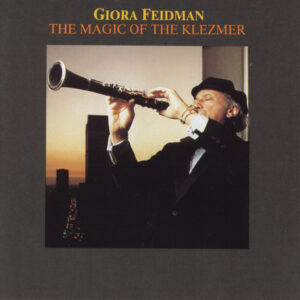 IV– Giora Feidman. (01:03:01 min)
The roots of contemporary klezmer actually lie in Eastern Europe. Giora Feidman’s father, grandfather, and great-grandfather performed there at weddings and Jewish holidays. The mass migration of Eastern European Jews to America and Israel ensured that klezmer also found its way there. The diversity of klezmer composers’ homes is evident in the extensive resources from which Giora Feidman selected the fifteen instrumental pieces on this album. They include ancient melodies, Yiddish evergreens, an Israeli dance number, and modern American compositions. Feidman’s clarinet plays a prominent role, which, according to renowned author Isaac Bashevis Singer, “speaks to him with all the emotions of a soul in exile.”
CD. Magic of the klezmer – Giora Feidman. LABEL: Delos (1986), code: D/CD 4005. VIDEO
 V– Shisha Group. (41:49 min)
A trio consisting of: Haytham Safia: oud and vocals, Janos Koolen: mandolin, guitar, piano & Arthur Bont: percussion and udu. The trio is led by Janos Koolen, who also wrote half of the pieces on this album. Koolen operates within the realm of folk and pop music, and with this album, he has also ventured into jazz, primarily because the music features a relatively high level of improvisation. The untitled album demonstrates how the right blend of instruments can achieve fascinating results. Moreover, how this confusion can allow the music to travel, reaching various continents. You’ll hear Arabic music—not only colored by the use of the oud—but also Irish folk music, Eastern European Gypsy sounds, danceable Klezmer, and improvisations ingeniously woven into catchy song fragments.
CD. Shisha Group – Shisha Group. LABEL: Me and My Other (2017), code: MMOCD 2017. VIDEO
 VI– Oum Kolthoom:
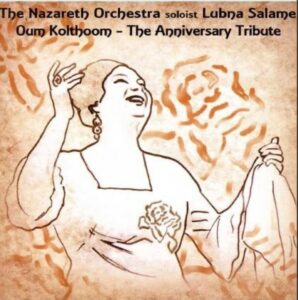
The anniversary tribute, Lubna Salame, Nazareth Orchestra. (36:26 min)
This album commemorates the 100th birthday of legendary Egyptian singer Oum Kolthoum, the diva of Arabic music. The emotion and power that Lubna Salame’s vocals exude are comparable to those of Oum Kolthoum. With her singing, Lubna gives well-known songs a fresh and interesting new impetus, while retaining her own unique flavor and depth.
The Nazareth Orchestra featuring Lubna Salame was recorded live during the “Peace Festival” in Tel Aviv in June 2003.
CD. Oum Kolthoom: The anniversary tribute, Lubna Salame, Nazareth Orchestra.
LABEL: Magda (2007), code: MGD042. VIDEO
Thanks to: