




































Musicians from West Africa: Ivory Coast, Mali, Ghana & the Sahara, produced by Cobie Ivens.
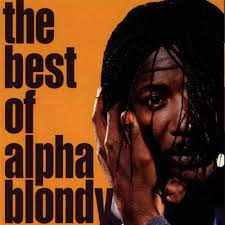 I– Alpha Blondy, Ivoorkust (01:08:17 min)
In the 1980s, reggae grew into a global phenomenon. The Jamaicans no longer had the monopoly on the music. Musicians in Europe and Africa also threw themselves into reggae. Alpha Blondy (Ivory Coast, 1953) first came into contact with reggae in 1973 when he was living in New York. After returning to Africa, he began recording under the pseudonym Alpha Blondy. His music is strongly inspired by the roots reggae of Bob Marley. His lyrics are socially critical. On the other hand, Alpha Blondy is interested in spirituality, as is evident in songs like God Is One. Since 2005, Alpha Blondy has also been a UN Ambassador for Peace.
CD. The best of Alpha Blondy – Alpha Blondy.
LABEL: EMI 8370412 002 – EMI 002 8370412 (1996). VIDEO
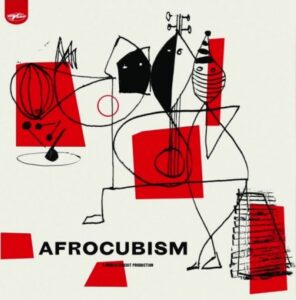 II– AfroCubism, Mali / Cuba (59:16 min)
English producer Nick Gold has been dreaming of an album featuring Cuban and Malian musicians for years, but it took fourteen years to finally get everyone into the studio. Guitarist Eliades Ochoa and his band Grupo Patria are championing the Cuban colours. Toumani Diabaté (kora), Bassekou Kouyaté (ngoni) and Djelimady Tounkara (guitarist for the Rail Band) are representing Mali. Each participant was allowed to bring ten songs and eagerly incorporated each other’s repertoire. All songs were recorded in a single take.
CD. AfroCubism – AfroCubism.
LABEL: World Circuit (2010) code: WCD 085. VIDEO
III– Salif Keita, Mali (01:00:19 min)
Salif’s childhood was not easy. An albino is physically weaker and is often seen as a sign of bad luck in Africa. When he developed a passion for music and wanted to make it his profession, he was definitively rejected by his family: music was reserved only for the lower griot caste and therefore unthinkable for someone from the aristocratic family to which he belonged. In the sixties he left for Bamako, the capital of Mali, where he soon seduced everyone with his extraordinary voice. Salif Keita’s left for Paris in 1984. After the French-oriented album Sosie (1997) and the funky Papa (1999), he gradually returned to his African roots. The album Moffou (2002) is an entirely acoustic album, one hundred percent inspired by Africa. Special guest on Yamore is Cesaria Évora.
CD. Moffou – Salif Keita.
LABEL: Universal Records (2002) code: 169062. VIDEO
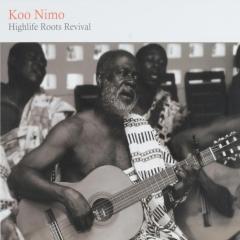
IV– Koo Nimo, Ghana (01:05:27 min)
West African dance music, which emerges from a cocktail of local and European ingredients. Highlife emerged at the beginning of the twentieth century in Ghana. European sea shanties, church and army music fused with the traditional rhythms and melodies played along the coast. Two movements emerged from this cocktail: the first was played by brass bands in elite dance halls (hence the name highlife). The dance movement was influenced by jazz, swing, and Caribbean rumba and calypso. Guitar bands exchanged their acoustic instruments for a pop group formation. There were heydays in the mid-20th century with many highlife dance bands. After the eighties, reggae, gospel, and hip-hop increased significantly in popularity. Highlife and Koo Numo seemed to have had their day.
CD. Highlife roots revival – Koo Nimo.
LABEL: Riverboat Records (2012) code: TUGCD1064. VIDEO
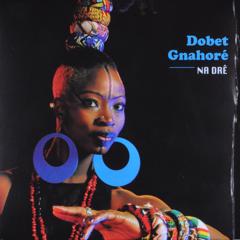
V– Dobet Gnahoré, Ivoorkust (47:15 min)
Like other powerful women, Dobet Gnahoré proudly embraces her African heritage. The charismatic and energetic singer, dancer, and percussionist from Ivory Coast has long lived in Europe with her husband and partner, guitarist Colin Laroche de Féline. But her focus and heart remain in Africa, which she musically expresses again on the album Na Drê (‘my heart’). It is perhaps also her most accessible album, somewhat calmer and more restrained than her predecessors, with Gnahoré’s soulful voice softly supported by a female backing choir. In languages and styles from various African countries—for example, pygmy singing—blended with Western (jazz) styles, she expresses her dream of a Pan-Africa where diverse tribes and cultures live together in peace and the position of women is improved.
CD. Na drê – Dobet Gnahoré.
LABEL: Contre Jour (2014) code: CJ031. VIDEO
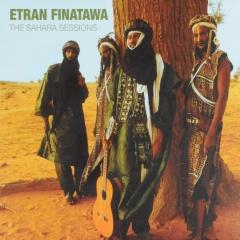
VI– Etran Finatawa, Sahara (58:34)
The group Etran Finatawa hails from two Touareg nomadic tribes in the Sahara Desert. This multicultural band advocates for cultural tolerance, solidarity, and unity. Their album, “The Sahara Sessions,” was literally recorded in the Sahara Desert, in a large animal-skin tent covered with carpets. Their characteristic hospitality was also reflected musically: a traveling percussionist on a motorcycle stopped and accompanied a few songs, a local griot made a special appearance, and three Touareg women living in Niamey spent the day. Even the curious, giggling neighborhood children were eventually invited to sing and clap along. The album thus creates a beautiful blend of improvised music and tightly arranged songs in the hypnotic “desert blues” style.
CD. The Sahara sessions – Etran Finatawa.
LABEL: World Music Network (2013) code: TUGCD1071. VIDEO
Thanks to: