Concertzender | radio, theme channels, on demand
Search for:
spinner

Listen now
Soon
Just played

arrow left
arrow right
spinner

Theme Channels

more
arrow left
arrow right
spinner
button spinner
button spinner
button spinner
button spinner
button spinner
button spinner
button spinner
button spinner
button spinner
button spinner

Recent

Schedule & On Demand
arrow left
arrow right
spinner

News

More news
arrow left
arrow right
spinner
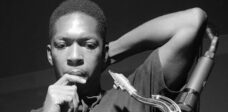
Miles Davis & John Coltrane Centennial (5)
Saturday 19th September 2026, 5:00 PM – House of Hard Bop. In the spring of 1960, Coltrane left the Miles Davis Quintet to strike out on his own. We follow him on this journey. In 1960, Atlantic Records produced three albums: *My Favorite Things*, *Coltrane Jazz*, and *Coltrane Plays the Blues*. In his new quartet, he was surrounded by pianist McCoy Tyner, bassist Steve Davis, and drummer Elvin Jones. Tyner and Jones would remain with him for years. And alongside the leadership role and the lineup, there was yet another new factor: the soprano saxophone! Earlier that year (1960), while in Paris with the Miles Davis Quintet, Coltrane had been given a soprano saxophone as a gift—by Davis. (Foresight?) The instrument—rarely played in jazz at the time, yet possessing a unique tonal character and set of possibilities—immediately intrigued him. Months of study and experimentation followed, including on stage. By the time he entered the studio in October, he was fully prepared. My Favorite Things Coltrane had already been playing the album’s title track—a song from the Rodgers & Hammerstein musical *The Sound of Music*—for months, a practice he continued even after this recording. The melody remained intact, but the chords gave way to modally colored harmonies over a continuous tonic note of E. This was a radical departure that dismantled the piece’s traditional “form.” The constant repetition created a “meditative” atmosphere—a foundation upon which Coltrane could explore his new ideas regarding melodic improvisation. This 14-minute track turned the LP into both an artistic and a commercial success. As Coltrane himself said of *My Favorite Things*: “My favorite piece of all those I have recorded.” Ev’ry Time We Say Goodbye This composition by Cole Porter is also a standard from the Great American Songbook. A cooling-down period after the previous track. A slow tempo. And bassist Steve Davis, following the repeated E of the previous piece, can once again map out his paths through the chord progression. Summertime Indeed—every track on this album is a standard. The last two are by Gershwin. Yet, right from the first four bars, we hear Coltrane’s own twist: augmented chords and the corresponding whole-tone scale. It sounds ethereal and dreamy, while generating tension. These elements keep recurring within the cyclical form. Coltrane is on tenor sax here. Drummer Elvin Jones steps into the foreground significantly on this track. Displaying his characteristic style—which he would develop further later on—he also takes a solo turn. An engaging interplay between drums and bass follows. But Not for Me Here, too, we hear unconventional harmonies in the opening bars. And even a distinctive, idiosyncratic note within the theme itself… ————————– Village Blues An original Coltrane composition from the album *Coltrane Jazz*. Melodically, the piece is simple—the blues form takes the lead. ————————- Coltrane Plays the Blues This is not a concept album, but a collection of blues tracks compiled by Atlantic. “Blues to Bechet” is dedicated to soprano saxophonist Sidney Bechet (1897–1959). It features a trio lineup without piano, placing a sharper spotlight on the horn player—here on soprano sax. He alternates short, simple phrases with rhythmic bursts in the upper register. Bassist Steve Davis remains unshakeable in his four-to-the-bar pulse; drummer Elvin Jones moves and accents, gradually increasing the volume towards the end. There is a surprising moment of unison between bass and sax in the closing phrase. After the previous track, “Mr. Syms” demonstrates the variety possible within the blues genre. Coltrane sticks with his soprano – pianist McCoy Tyner is back on board. House of Hard Bop – Eric Ineke
In Memoriam : bass Harry van der Kamp ( 1947 – 2026 )
In Documento on Thursday, September 3rd, we will broadcast an In Memoriam following the passing of Dutch singer (bass) Harry van der Kamp. He passed away on August 17th, 2026, at the age of 79. Harry van der Kamp initially studied law and psychology before continuing his vocal studies at the Sweelinck Conservatory with Elizabeth Cooymans and Max van Egmond. As a singer, he primarily performed music from the Renaissance and Baroque periods, including Baroque operas by Cavalli and Handel, among others, and the Passions of Johann Sebastian Bach. He worked with the Hilliard Ensemble, Musica Antiqua Köln, Les Arts Florissants, and the Huelgas Ensemble, and with conductors such as Gustav Leonhardt, Nikolaus Harnoncourt, Frans Brüggen, and Ton Koopman. He himself founded the Gesualdo Consort in 1984, was a co-founder of Cappella Amsterdam, and conducted the Kapel van de Lage Landen. In Documento, we hear a work by Antoine Busnois performed by the Kapel van de Lage Landen, music by Sweelinck by the Gesualdo Consort, madrigals by Claudio Monteverdi by Tragicomedia featuring Harry van der Kamp, among others, and a bass aria by Johann Christoph Bach performed by Harry van der Kamp and the Period Instrument Ensemble. The music world, and especially the early music world, will sorely miss his voice and his expertise. Broadcasts: Thursday, September 3rd, 2026, 21:00 – 22:00 Tuesday, September 15th, 2026, 11:00 – 12:00 Klik hier voor de playlist.  

Coming up

schedule
arrow left
arrow right
spinner
Spinner
close
To use this functionality . If you don't have an account yet, register first.

Create your account

Forgot Password?

Don't have an account yet? Registreer dan hier.

Change password