

































Saturday, February 21, 2026, 17:00 CET – House of Hard Bop.
We’ll be beginning with Jackie McLean’s Demon’s Dance which was recorded in 1967 (see the previous broadcast and the previous News item). The second half of this hour is dedicated to McCoy Tyner/Joe Henderson’s Forces of Nature: Live at Slugs, from 1966. Definitely not music for any time of the day – the absolute opposite of muzak. be prepared for a wild, spouting barrel of musical atomic energy!
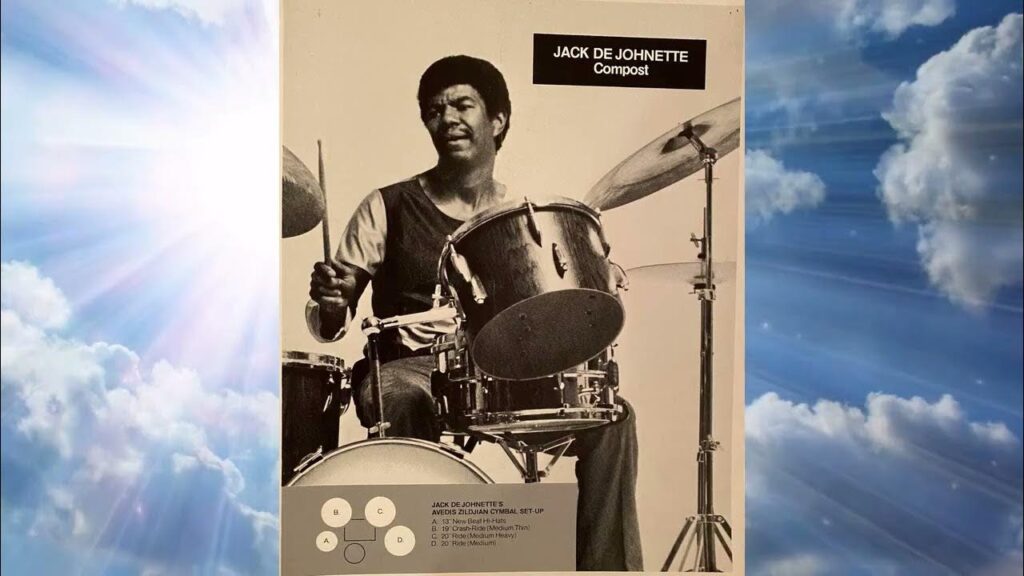
JackDeJohnette: “Everybody really played like there was no tomorrow.”
Zev Feldman (producer): “This (…) album has been one of the most exciting projects I’ve ever been involved with.”
Joe Lovano admitted that while listening to it, “he just had to turn it off and catch his breath because of its white-hot intensity.”
On Demon’s Dance, Jackie McLean’s final album for Blue Note, we also hear trumpeter Woody Shaw, pianist LaMont Johnson, bassist Scotty Holt, and, of course, Jack DeJohnette. Recorded in 1967, released in 1970.
- Boo Ann’s Grand (Woody Shaw) has a symmetrical form, with the consonant middle section contrasting with the melodically “dissonant” A section. Another difference: the A section is based on a whole-tone scale, which gives it a characteristic “colour.” The B section is based on diatonic scales. The drummer accentuates the difference between these formal sections. Extended whole-tone passages, with their “floating” character, are not without risk. They are used sparingly, even in classical music. The drummer however has no problems with them – even during his solo.
- Sweet Love of Mine (Shaw). Gone are the whole-tone scales and dissonances. Relaxed bossa nova style, but certainly not without tension. Bassist Scotty Holt distinguishes himself with his own rhythmic patterns.
- Floogeh (McLean) sets a brisk tempo. Original theme, which even includes a moment of silence… Striking repetitions of two chords during the piano solo. Bassist Holt also displays his own character during his solo.
- Message from Trane (Cal Massey). DeJohnette opens the piece and also closes it. After only a few bars of theme, it suddenly ends.
Forces of Nature is a quartet featuring drummer Jack DeJohnette, pianist McCoy Tyner, tenorist Joe Henderson and bassist Henry Grimes. A live recording made at Slugs’ (Saloon) in New York. The club was located in the East Village, not a great neighborhood. In 1972, trumpeter Lee Morgan was shot and killed by his ex-wife at Slugs’ .
DeJohnette, at 23 the youngest member of the band – and also the last living – member of the band, kept a copy of the recording in his archive. More than half a century later, the special evening was revived after mixing and mastering, on the Blue Note label.
In ’n Out *) is a composition by Joe Henderson. A blues in F. He also plays it on his eponymous Blue Note album from 1964. McCoy Tyner is also on piano on that album. The performance of this piece on Forces of Natures is significantly stretched to almost half an hour.
BANG! They enter with a loud thud. Just so we know it right away. Drummer JDJ really gets going in the first few minutes: increasing volume, accents, gradually more circular figures across all the parts of the drum kit – one of his signature styles. That high energy level is a constant, occasionally decreasing in intensity and volume; often only for a short period. The melodic blues motif is repeated a few times, and the off they go again. Pianist Tyner also introduces some “out-of-harmonic” harmonies here and there. After a while, he stops comping, something he often did in the John Coltrane Quartet.
The interaction between the horn player and the drummer is thrilling. They’re right on top of each other. What a dynamic duo! Henderson, in particular, pushes the boundaries of the blues format, creating tension between form and solo line. Tyner alternates in his right hand between free, modal note swings and occasional straight-up classic blues figures. When Henderson rejoins, the “12 bars one, 12 bars the other” game kicks in, and they sprint together to the finishing line.
And bassist Henry Grimes? He remains imperturbable from beginning to end with his four-in-the-bar rhythm. A feat in itself, to maintain that for almost half an hour.
Finally Isotope – also by Henderson— during which everyone (including us) can take a break. This is also a blues, this time in C.
On YouTube you can listen to a conversation between Jack DeJohnette and Don Was about this concert.
House of Hard Bop – Eric Ineke
*) DThe terms in and out have specific meanings in jazz. In means a fixed key and a constantly repeating form and chord progression. Out ignores one or more of these characteristics, colours outside the lines, and is therefore less predictable.
(Jack DeJohnette died in October 2025, at the age of 83.)